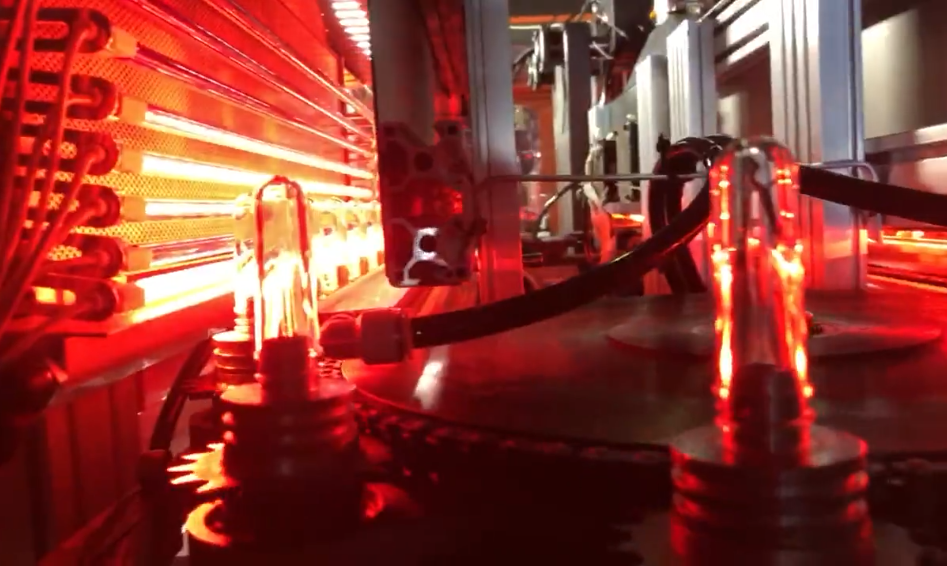
On a Sidel SBO or a Krones line, the heating tunnel is where uptime, quality, and energy spend all slam into each other. If preforms have to hang around just to hit the right stretch ratio, you lose shots per hour. When lamps get old and start fading, wall thickness and haze go all over the place. We see this week after week in plant audits—heater failures that force overtime, scrap, and lamps that get swapped way too soon. Here’s what actually matters under the hood. This fast-heat IR lamp is built for blow molders: short-wave quartz halogen, high-purity filament, and reflector geometry that’s tuned for the job. It comes up to full power in seconds, so you can keep pace with fast pitch and high-cavity cycles. The specs are chosen to drop into common blow molding heater blocks: 240V or 480V, compact quartz tube lengths, and standard R7s connectors. The spectrum is set for PET preform heating—surface absorption is efficient, with less energy wasted as ambient heat. Plug it in where the OEM-style heaters sit, and the soak time drops. The thermal window tightens. The payoff is something you can measure in bottles and in the power meter: more bottles per hour at the same line speed, fewer rejects driven by temperature, and a real cut in kWh per thousand bottles. In the field, we’ve got units running 5,000+ hours with less than 5% output drop. Cycle-to-cycle repeatability improves because the lamp recovers fast after every shot. A few practical notes before you roll it out. Match the lamp to the machine. Check voltage, wattage, length, and mounting geometry for your blow molder—Sidel, Krones, SIPA, Husky, SACMI, or Nissei ASB. Even small mismatches shift the focus and the temperature. You’re dealing with a bright, focused IR field. Shielding and proper clearance matter—protect the operator and keep nearby components from cooking. Run it on a clean, stabilized supply to spare the filament. Get the spec and the install right, and the tunnel runs cooler, steadier, and faster.