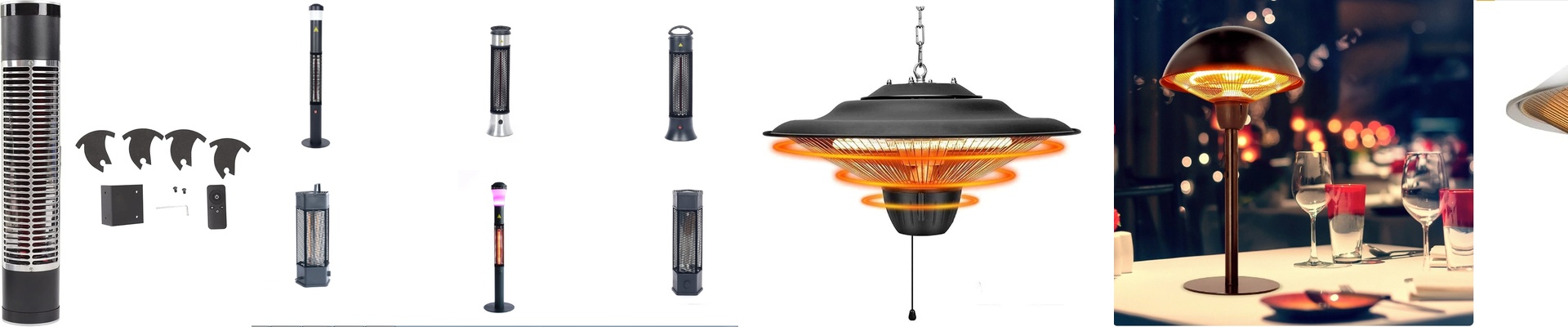
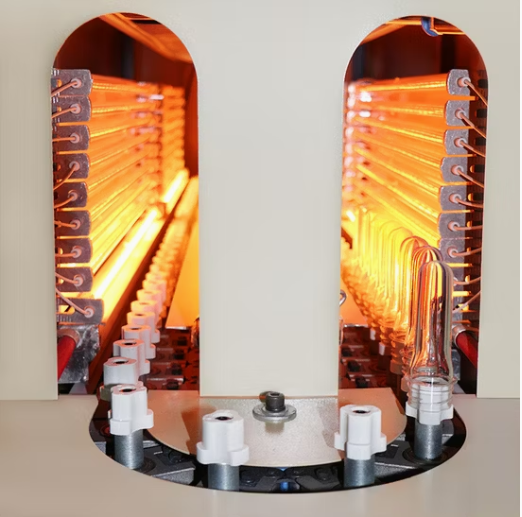
On an Aoki stretch blow molding line, the heating tunnel is where the whole process sets its pace. Preforms move through zone after zone, and the infrared energy has to hit exactly right—every time. If a lamp starts weak, drifts in output, or burns out early, you don’t just lose a part. You lose uptime, you lose bottle weight consistency, and you lose the predictability your operators need to run clean. We build replacement lamps for Aoki blow molders to match the original heating logic: the right wattage density, the right spectral profile, and the right mechanical fit. No guessing. No “one-size-fits-all.” Just a direct, plant-floor solution that belongs in an Aoki tunnel.
What actually matters: specs that translate into stable heating
Aoki machines are tuned to a specific infrared heating signature. Swap in an emitter that changes the curve—too much short-wave spike, too little mid-wave depth—and you’ll see uneven preform heating. That shows up as thick walls on one side and thin walls on the other. Our replacement lamps are built around the realities of preform heating:
- **Wavelength choice:**We supply short-wave and medium-wave infrared emitters, chosen to match PET absorption and the dwell time inside the Aoki tunnel. Short-wave gives fast surface response; medium-wave penetrates more evenly. In practice, picking the right one cuts hot spots and reduces rejects.
- **Wattage and power density:**We match the OEM-equivalent wattage for each zone. Too low, and you end up chasing temperature by slowing the line. Too high, and you risk overheating, crystallization, and lamp stress. The numbers are chosen to hold setpoint without overshoot.
- **Voltage and ignition:**Available in standard voltage configurations, with instant-on response and stable resistance across the heating cycle. No warm-up delay, no drift once the tunnel settles in.
- **Mechanical interface:**We match the physical envelope—length, diameter, and end fittings—so the lamp drops into the reflector and holder as designed. Common terminations include R7s and other standard connectors used in blow molding heaters.
- **Quartz quality and stability:**The quartz tube is selected for high thermal shock resistance and consistent transmission in the infrared band. That matters because tunnel environments cycle quickly, and unstable transmission becomes unstable preform temperature.
Why it holds up on the line: uptime, quality, and cost you can measure
Aoki lines are built for repeatable cycles. The heating system has to keep pace without turning into a maintenance bottleneck.
- **Faster recovery after lamp change:**When a lamp fails, you want the line back in spec quickly. Our lamps are engineered to come up to temperature fast and hold it, so the operator isn’t spending the next hour tuning the tunnel back to the right preform stretch profile.
- **More consistent bottle quality:**Stable infrared output means stable preform temperature. That shows up as tighter wall distribution and less variation in bottle weight. When heating is repeatable, the blow molding window widens and scrap drops.
- **Fewer lamp changes per year:**We design for long service life under real tunnel conditions—high cycle rates, thermal cycling, and continuous duty. Fewer replacements means fewer scheduled stops, fewer spares on the shelf, and less maintenance labor.
- **Energy use that doesn’t creep:**A lamp that loses output over time forces the control system to compensate. That often shows up as higher power draw, not lower. Matched emitters help keep energy per bottle aligned with the design intent.
- **Direct fit, less rework:**Compatibility isn’t just about whether the lamp physically fits. It’s about whether the lamp behaves like the original in your control strategy. We size the emitter to the Aoki tunnel’s zone logic, so you don’t have to re-map heating curves or re-tune zones.
What to expect on the floor: installation, compatibility, and real constraints
Even with the right part, lamp changes don’t always go perfectly. Here’s what we see on the line, and what to plan for.
- **Match the lamp to the zone.**The front, middle, and rear zones in an Aoki tunnel demand different heating profiles. A lamp that works in the middle zone can be too aggressive in the front, and too weak in the rear. Confirm the zone and wattage before ordering.
- **Check the reflector condition.**A worn or oxidized reflector can cut delivered energy by a noticeable margin. If you swap lamps and suddenly see temperature drift, the reflector may be the culprit. Reflectors are cheaper than chasing symptoms.
- **Inspect holders and wiring.**High temperatures harden ceramic holders and oxidize terminals. If the holder is cracked or the contacts are pitted, the new lamp will underperform and fail early. Replace worn holders at the same time.
- **Handle with clean, dry gloves.**Fingerprints on the quartz tube create hot spots and shorten lamp life. Wiping isn’t enough—oils bake on and change thermal behavior.
- **Expect a short tuning window after replacement.**Even with matched lamps, a full tunnel change can shift the heating curve by a degree or two. Plan a brief stabilization period after replacement, then lock the settings.
- **One trade-off: thermal shock.**Quartz infrared emitters are efficient, but they’re sensitive to rapid thermal cycling. If your line stops and starts frequently, lamp life will be shorter than in steady continuous runs. That’s physics, not a defect. Mitigate it by minimizing abrupt starts and by using the lowest power setting that still meets your line speed. If you run an Aoki blow molder, the heating tunnel is no place to cut corners. The lamp has to deliver the right energy, at the right time, with the right stability. Our replacement lamps are built to do exactly that—drop in, run true, and keep your line producing bottles with consistent stretch and consistent weight. Tell us the exact Aoki model, the zone, and the wattage you need. We’ll supply the emitter that matches the machine’s original heating logic, so you can get back to running, not troubleshooting.