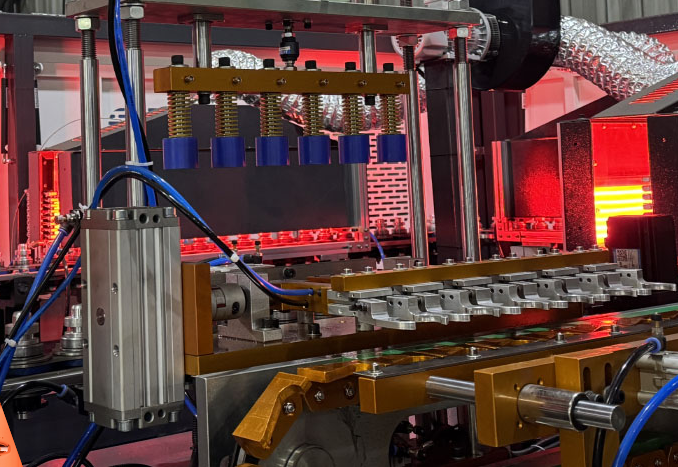
On a SIPA SFR 20 line, the heating tunnel is where the whole schedule lives. One weak emitter, one quartz tube that doesn’t match, and your preform heating starts drifting. Next thing you know, you’re seeing uneven wall thickness, a few rejects, and the usual scramble—calling support, sitting on inventory, or pushing the heater past its duty cycle just to get through the shift.
What matters, technically
The SIPA SFR 20 rotary blower heater tube we use is built around short-wave infrared halogen emitters in a standard quartz envelope, matched to the machine’s original power density and thermal response. We size the tube to the OEM heating zone geometry, with the correct R7s connector interface and terminal alignment so it drops straight into the existing holder—no field modification. The emitters are chosen for fast ramp-up and stable output over repeated thermal cycles, because in stretch blow molding, repeatable preform temperature is what keeps bottle weight and clarity in spec.
Why it works on this machine
This isn’t a “one-size-fits-all” tube. It’s tuned for the SFR 20’s rotary blower heater layout, where airflow and radiation have to stay in balance. When the tube matches the machine, you get consistent heating across the preform shoulder and body, fewer setpoint tweaks, and more uptime between planned maintenance windows. In practice, that means fewer heating-related alarms, less scrap, and a steadier line OEE. You also cut the risk of overheating neighboring components, which can shorten the life of the whole heating block.
What you need to know
Installation is straightforward, but alignment is where people get tripped up. Make sure the tube seats fully, the connector is clean and properly torqued, and the reflector is in place—otherwise output turns uneven even if the emitter itself is fine. Also, verify voltage at the heater terminals; line sag can make a perfectly matched tube underperform. Expect typical service life in the 5,000–7,000 hour window under standard preform cycles, and keep a spare on the shelf so one failure doesn’t turn into hours of lost production.