Getting the Perfect Crust: Why SWIR Tubes Matter for Your Deck Oven
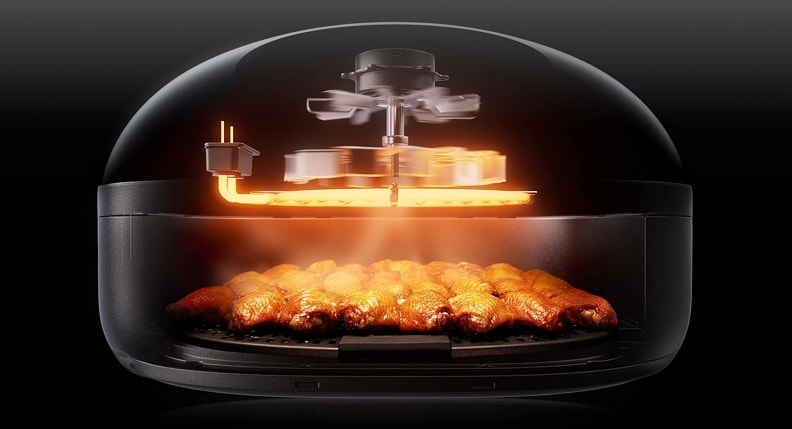
Let’s be honest: in a professional kitchen, “close enough” isn’t good enough when it comes to temperature. You need it exact. That’s why we’ve moved toward short-wave infrared (SWIR) heating tubes for our smart deck ovens. Here is the real difference: traditional elements have to warm up the air first. It’s slow. SWIR lamps don’t bother with the middleman. They send energy straight to the dough via radiation. The heat hits the surfaceinstantly.
Speed that actually keeps up
If you’re running an AI-driven kitchen, your controller is making decisions in milliseconds. You need hardware that can actually keep pace. These tubes are built for high-speed cycling. They hit full power almost the second they’re turned on. This solves that annoying “overshoot” problem you get with heavy cast-iron elements—where the heat keeps climbing even after you’ve told it to stop. Instead, you get a precise, consistent crust because the heat is concentrated exactly where the food is sitting.
The nitty-gritty on the build
We use high-purity quartz glass. Why? Because these things switch on and off rapidly, and that creates a lot of thermal shock. Cheap glass would just crack. We can also tweak the wattage and voltage to fit your specific power setup. Plus, we often add special coatings to the tubes. This pushes the energy toward your product rather than wasting it by heating up the oven walls. And don’t worry about the install. We use standard industrial connectors, so they just slide right in. We’ve also reinforced the connection points. When things get hot, materials expand, and that’s usually where burnouts happen. We fixed that.
A few things to keep in mind
Now, there is a trade-off. High-wattage short-wave tubes put out a massive amount of heat. You’ve got to make sure your oven’s chassis and vents can handle the soak. If the cooling isn’t up to the task, heat will build up around the sockets and kill the tube’s lifespan. To keep everything stable, we suggest pairing these with a PID controller and a fast-response thermocouple. It’s the best way to make sure your system stays dialed in.